Finding Vulnerabilities
An automated tool that found path traversal and Zip Slip vulnerabilities in 9 of 250 VS Code extensions.
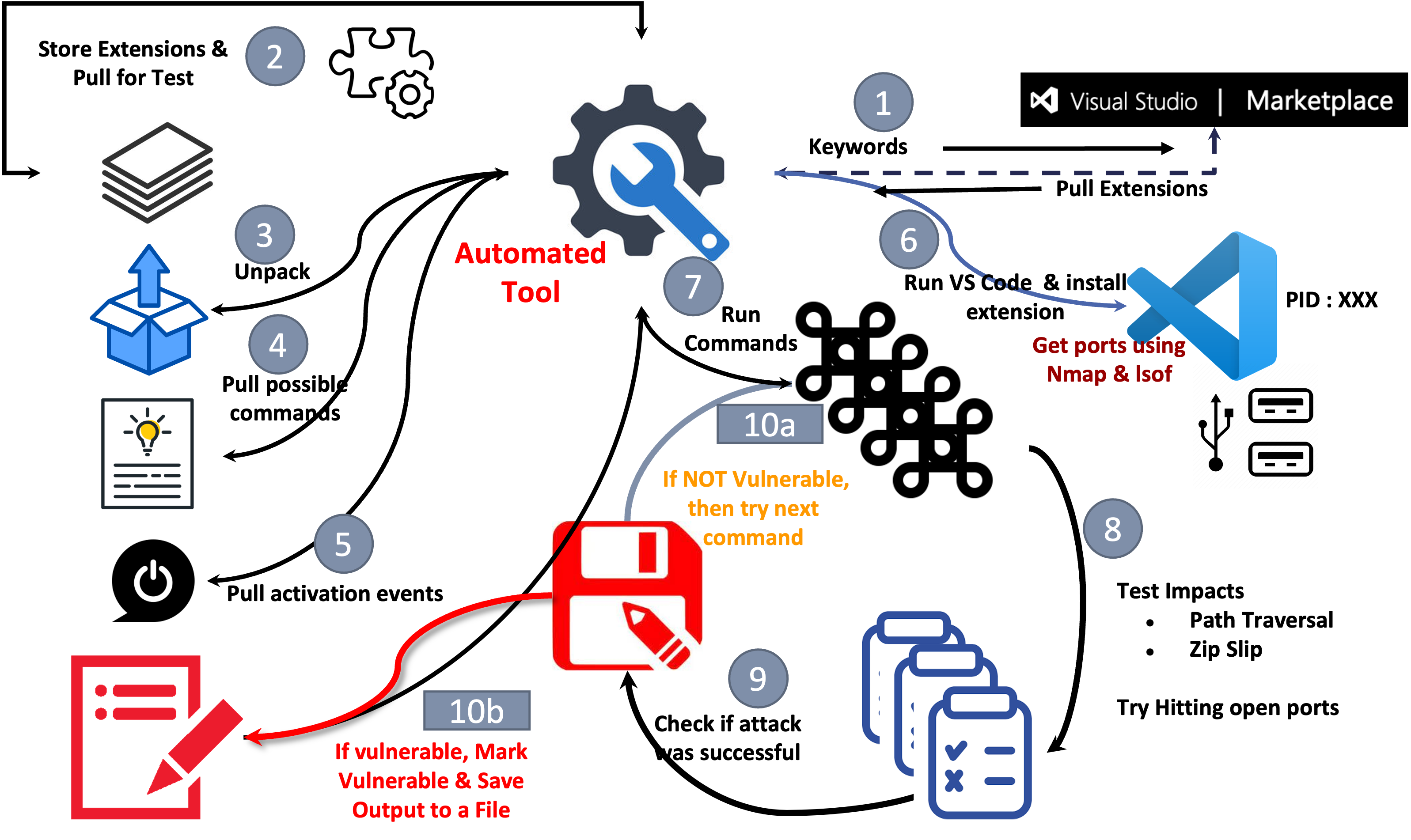
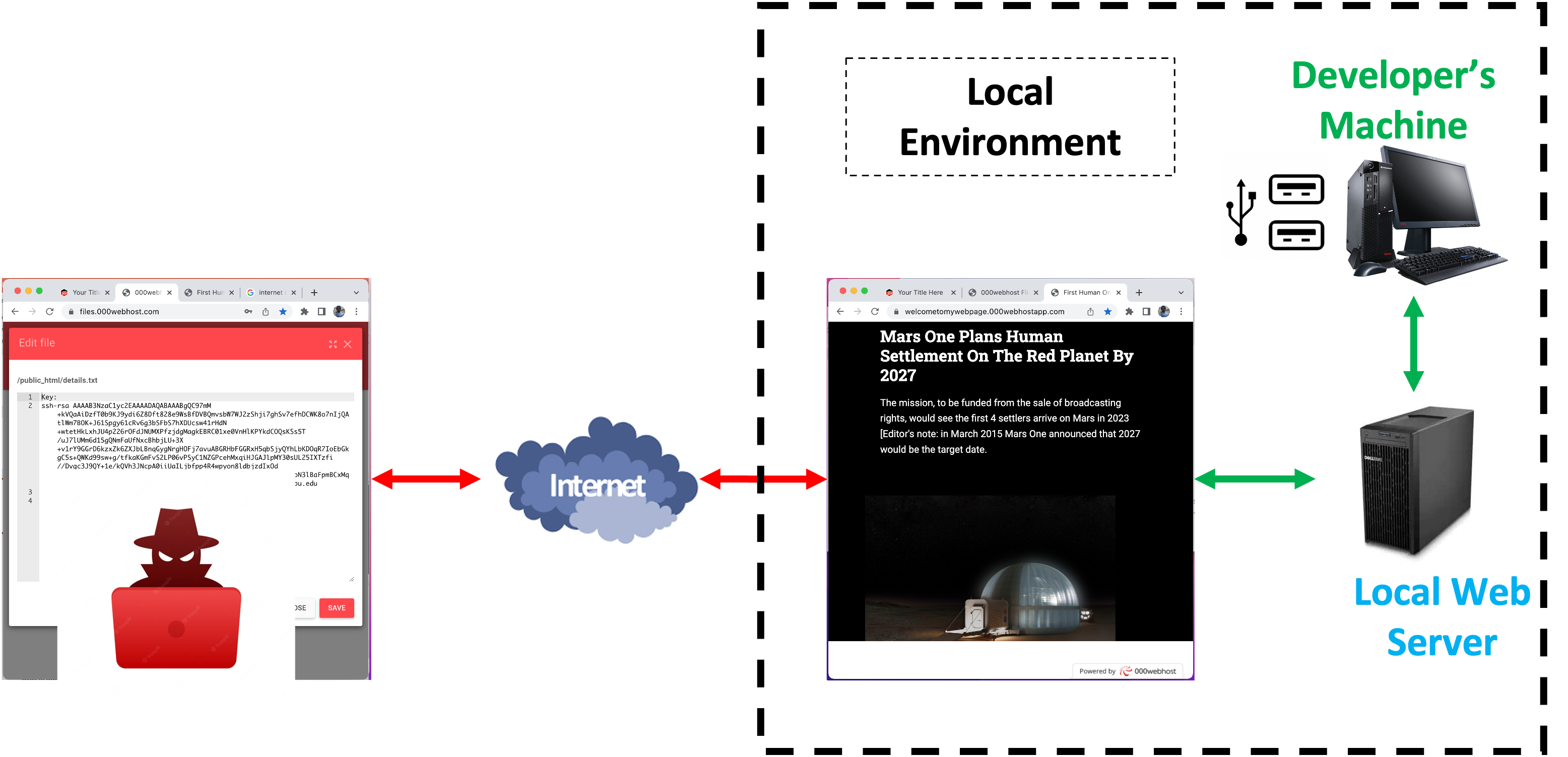
VS Code is a widely used text editor with numerous extensions that enhance its functionality. However, these extensions can introduce security risks if not properly vetted. This project analyzed VS Code extensions for two classes of file-system vulnerabilities, Path Traversal and Zip Slip, and built an automated tool to find them.
Motivation
With millions of developers relying on VS Code, extensions become an attractive target for attackers. Extensions run with the same privileges as the user, so a single extension that does not validate user input can expose the whole machine: a path traversal flaw lets an attacker read files outside the intended directory (credentials, configuration files, or system files), and a Zip Slip flaw lets a crafted archive overwrite or create files in arbitrary locations.
Overview
We focused on two kinds of extensions: those that open a port on the local machine (for example, live servers that preview HTML, JSON, or Markdown files), which are candidates for path traversal, and those that unpack zip archives inside VS Code, which are candidates for Zip Slip.
We built an automated tool using Python, asyncio, and pyautogui, which:
- Searches & Downloads Extensions – Queries the VS Code Marketplace by keyword, downloads matching extensions as VSIX files, and installs them with VS Code’s CLI.
- Analyzes Exposed Commands – Extracts each extension’s
package.jsonto find the commands it exposes. - Executes & Tests – Runs those commands one by one in a VS Code instance and attempts the exploit.
- Flags Vulnerable Extensions – Records vulnerable extensions and their details in a JSON report.
The tool tests over 100 extensions within a few minutes.
Challenges & Solutions
- Identifying Risky Extensions – Choosing search keywords that were both precise and comprehensive took several iterations.
- Rate Limits – The VS Code Marketplace rate-limits requests, so the tool uses asynchronous I/O to download and test extensions in parallel.
Results
We tested 250 extensions:
- Path Traversal found in 8 of 200 extensions that open a local port, including one with over 476,000 downloads
- Zip Slip found in 1 of 50 extensions that unpack archives, with over 256,000 downloads
For comparison, we also scanned the same extensions with the static-analysis tools Semgrep and Snyk; Semgrep caught more of the path traversal cases.
Conclusion
Our tool found real vulnerabilities in popular VS Code extensions, which highlights the need for better security vetting in the VS Code ecosystem. The report also covers how extension developers can mitigate both vulnerability classes.